

That’s not a typo. What you see in the video below, a working pet registration and excess-animal-permit demo for a local council, took us about an hour to build. We did it for fun.
You can try it yourself right now: upscalesolutions.au/pets (opens in a new tab). Click anything, add pets, make decisions, break nothing. If you get lost, the Reset button starts you over.
First, what a mockup actually is
This is a demonstration, not a live product. It’s a fully clickable prototype: every screen works, every button does something, and it runs on realistic sample data for a fictional council we invented, the Shire of Riverbend, Victoria. There’s no real database behind it and no payment gateway. Its job is to show what a real system would look and feel like, before anyone commits real money to building one.
That’s the point of a mockup. Ideas used to live in documents and meetings for months before anyone saw a screen. Now ideation happens at the speed of conversation: you describe the process, and a working prototype exists the same day. Then you argue about the real thing with something clickable in front of you.
Why pets?
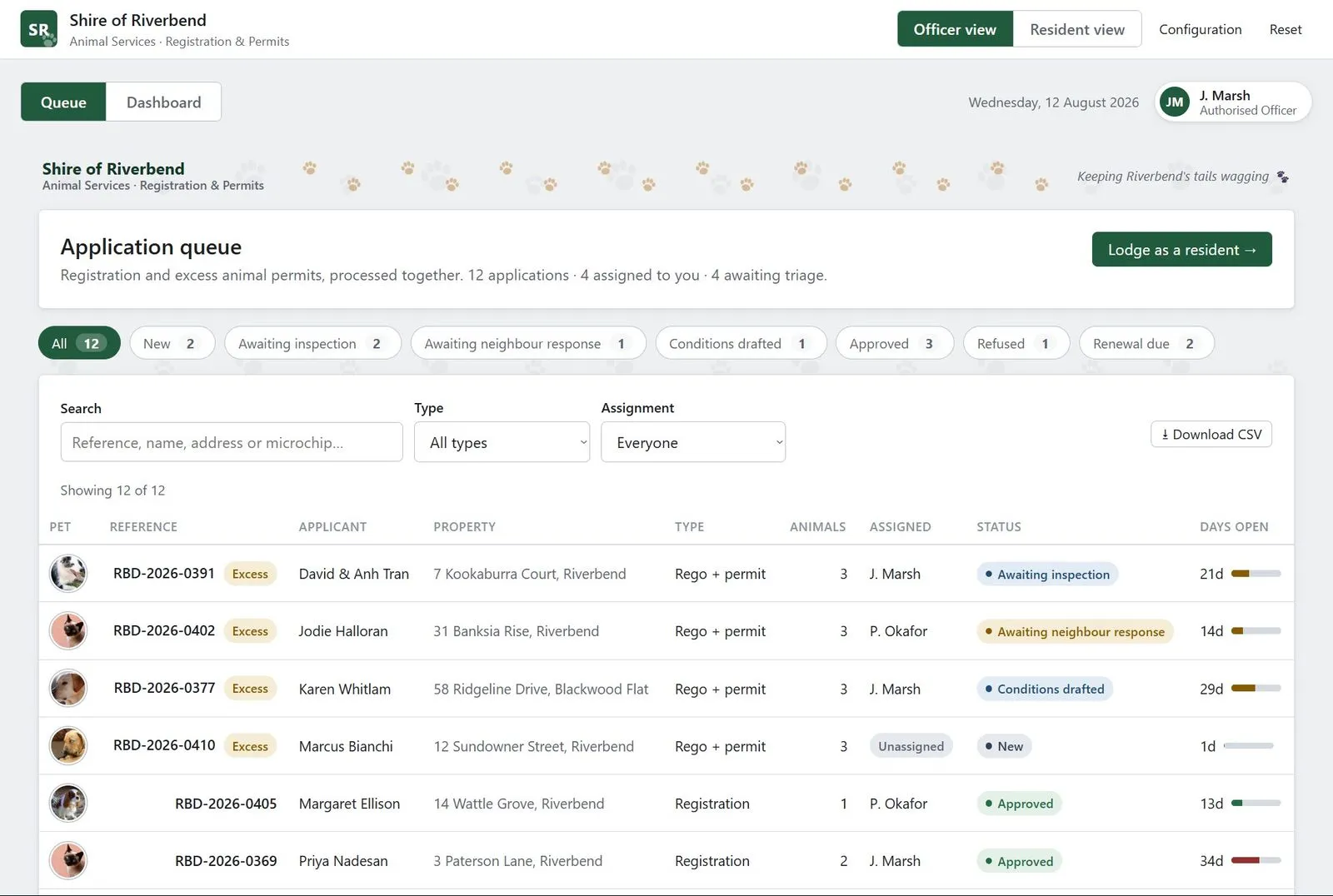
Because when we talk to councils, this process comes up more than any other. Registration sits in the core system. But the excess-animal permit, the approval a resident needs to keep a third dog, usually lives in someone’s inbox and a spreadsheet. PDFs going back and forth. Manual re-keying. No shared record, no audit trail.
So we explored what “fixed” looks like. And because we enjoyed it far too much, it has paw-print favicons, breed-matched pet photos and a puppy chatbot. Still one hour.
What’s actually in it
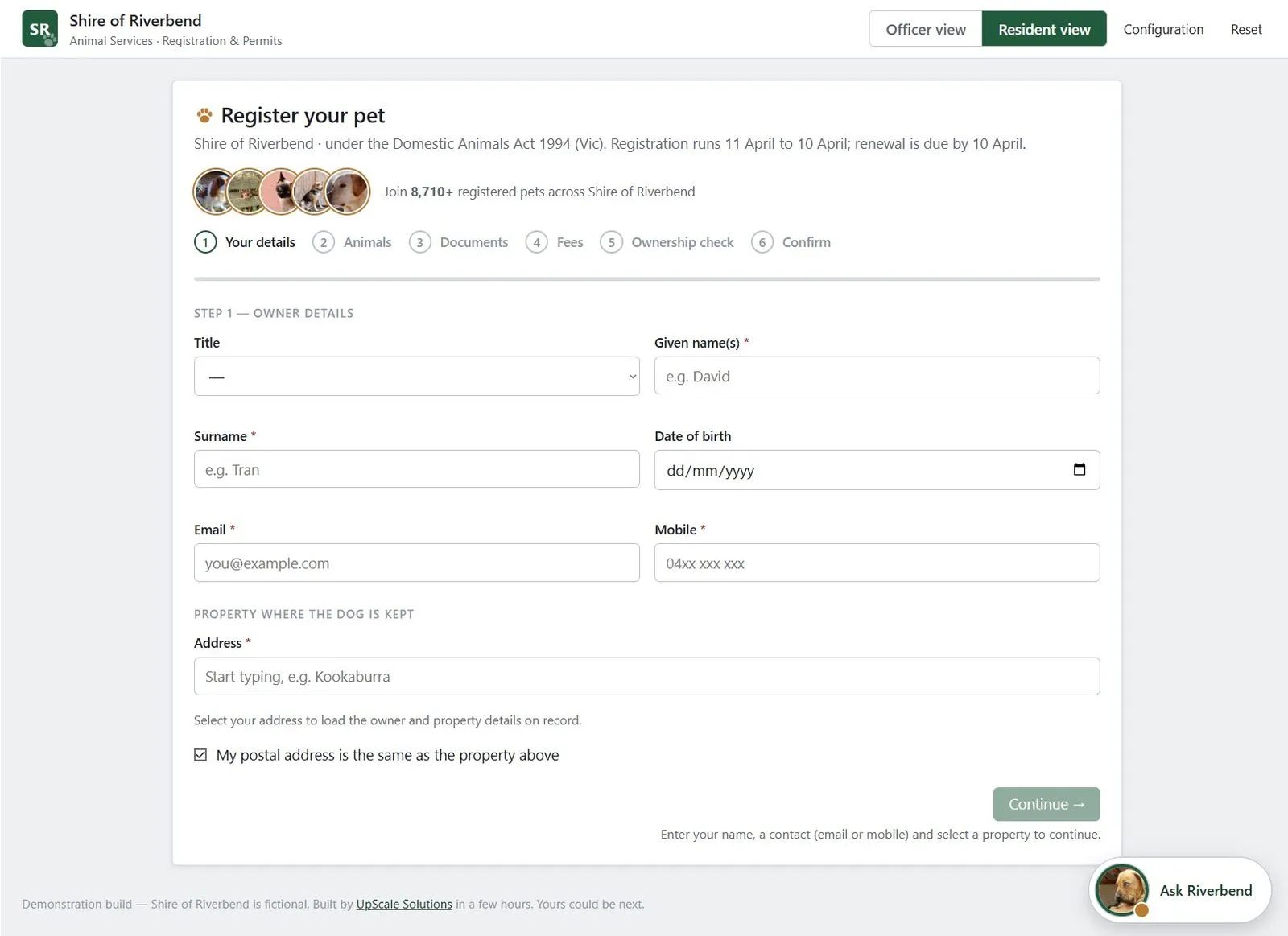
The resident side. A guided application: register, update or renew, upload pet photos, live microchip validation. Here’s my favourite moment: add a third dog and the form tells you, right there, that an excess-animal permit is required and will be included in this application. No second form, no separate process. Before lodging, a short responsible-ownership check asks three questions, with the answers in a built-in Dog Owner’s Handbook, so registration doubles as education. Residents can opt in to email or SMS renewal reminders on the way through.
The officer side. Every application lands in one queue: registrations and permits together. Cases can be allocated to a specific officer. Automated checks run before a human looks: microchip format, certificates, prior registrations, complaint history. The permit workflow schedules the inspection, notifies the neighbours and applies conditions from a library. Decisions generate a proper letter, citing the Domestic Animals Act 1994 (Vic) with VCAT review rights. And down the side runs an append-only audit trail: every action, timestamped, with who did it and what changed. If your records team worries about defensibility, that panel is for them.
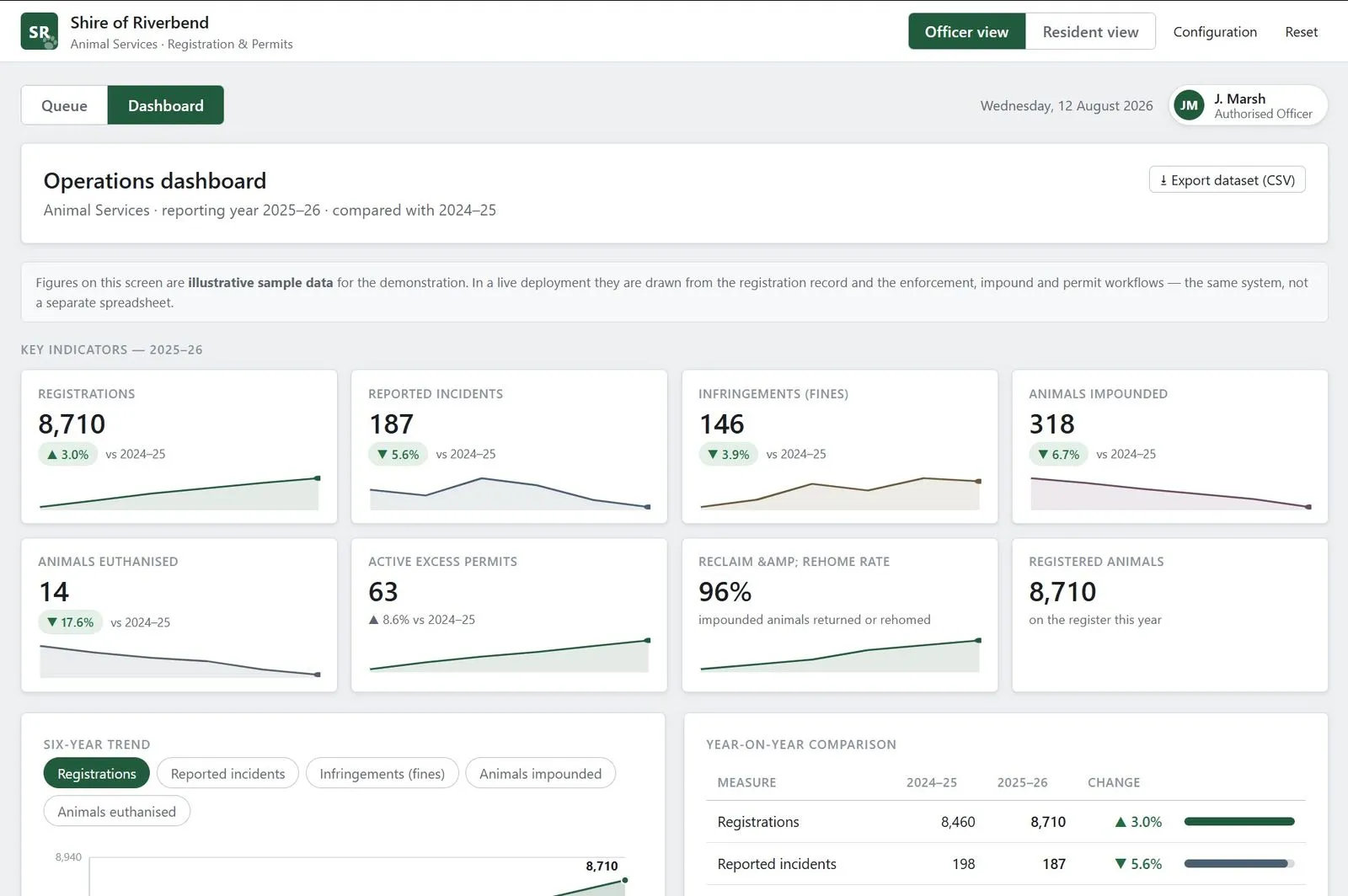
The dashboard. Registrations, incidents, infringements, impounds and euthanised animals, tracked in one place instead of five, with six years of trends. Plus a forward-planning tool: adjust the assumptions and it projects how many dog parks the shire needs by 2050. The same data that processes today’s application informs next decade’s capital planning.
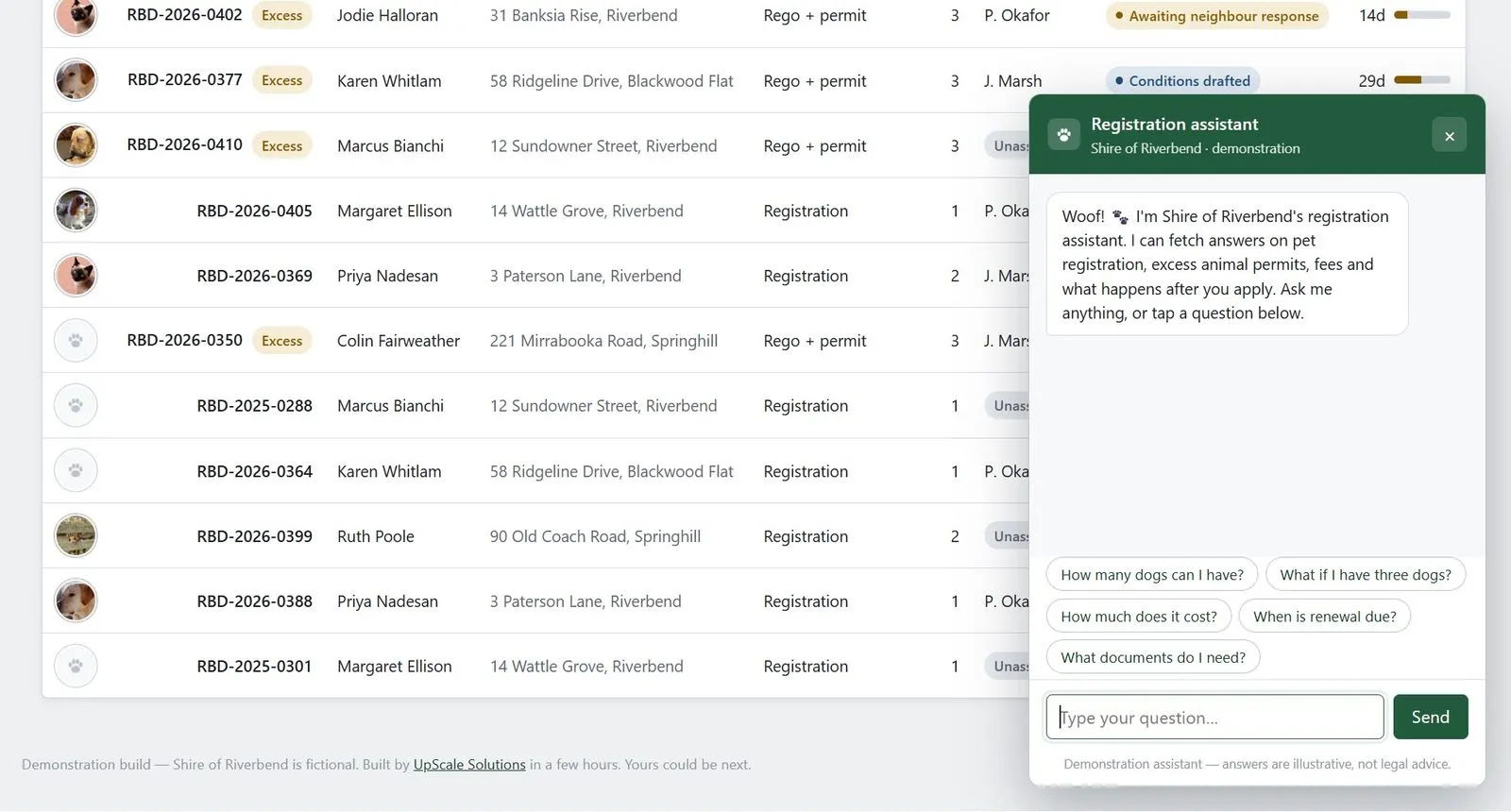
The AI assistant. A chatbot that knows the regulations and the data. Residents ask about limits, fees, exemptions or the permit process; officers ask about specific registrations. Change a fee or a limit in the configuration screen and its answers update to match, because everything in the system (fees, animal limits, conditions, even the council’s name and colours) is configuration, not code. Your local law is different to Riverbend’s. That’s a settings change, not a rebuild.
One more thing for the sceptics: the whole demo is a single self-contained file. Email it to your IT manager, they can run it offline and try to break it.
Why this matters to your council
Building custom software used to be slow, expensive and risky, which is why the spreadsheet-and-inbox workaround survives in every council. That equation has changed. Our AI-assisted build engine has made us about fifteen times faster than we were a year ago, which means custom systems are no longer just for the big end of town. The everyday processes that waste your staff’s time can now be automated affordably, with software built around how your council actually works.
A one-hour mockup isn’t a production system. Real delivery still means security, data handling, integration with your existing systems and proper governance. But the distance between “everyone complains about this process” and “here’s a working prototype of the fix” has collapsed. That’s what we wanted to show.
Which one manual process would you eliminate? Send us a message or call 0411 877 833.
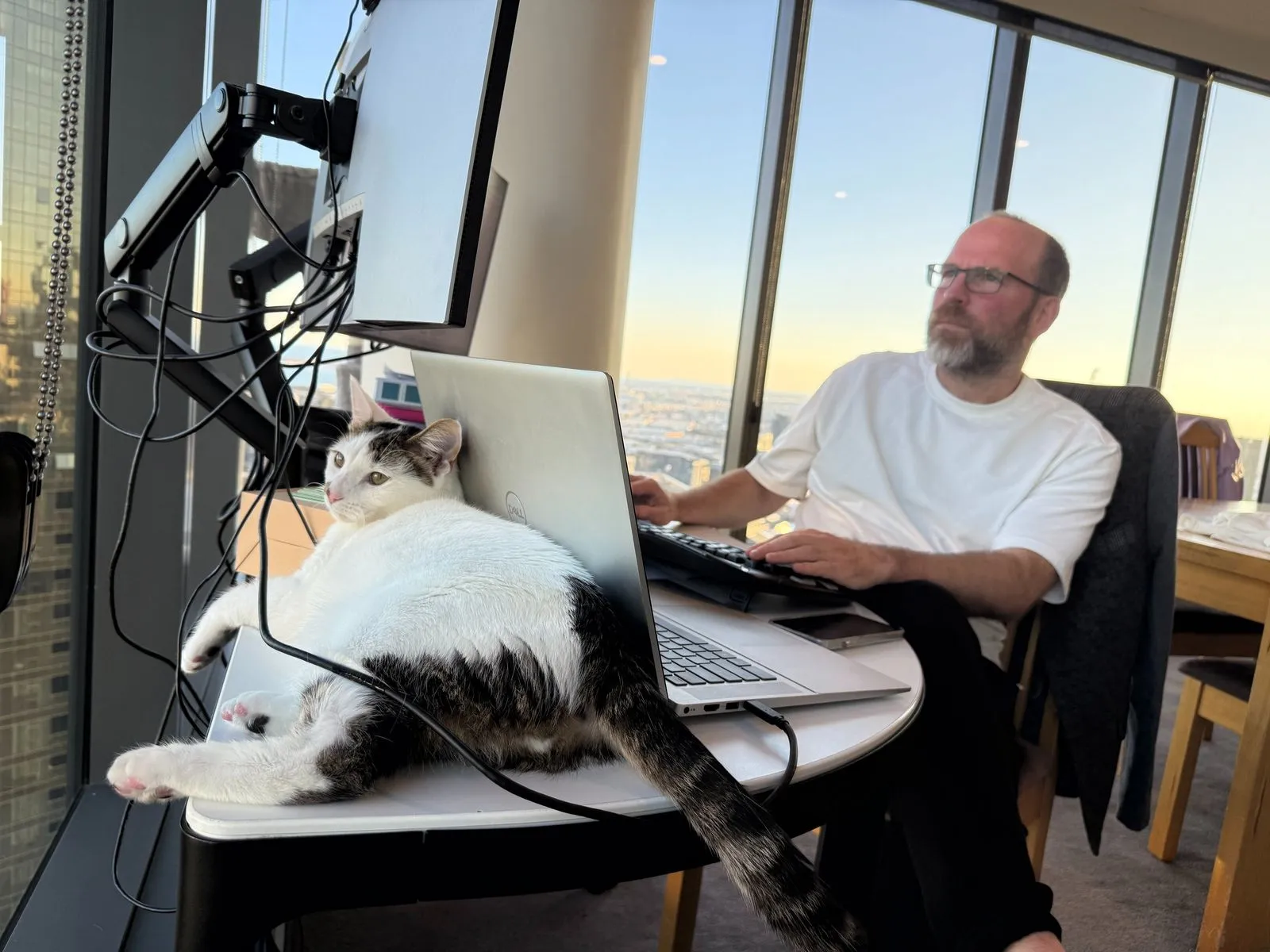
David working with his registered pet Mikeš